Mississippi Soil Does Not Forget: Tasia Fortune, Nolan Wells and Southern Silence
Authorities want us to treat the deaths of people like Tasia Fortune and Nolan Wells as isolated tragedies, as personal mental health crises detached from geography, history, or race. But Mississippi’s soil has a memory, and so do we.
Every time a Black body turns up hanging from a tree in Mississippi, the official machinery moves with a terrifying, rehearsed efficiency.
The tape goes up. The area is swept. And before the dust even settles—before a family can catch its breath or an independent pathologist can put a gloved hand to the evidence—the local authorities rush to issue their favorite word: suicide. No foul play suspected. Move along. Nothing to see here.
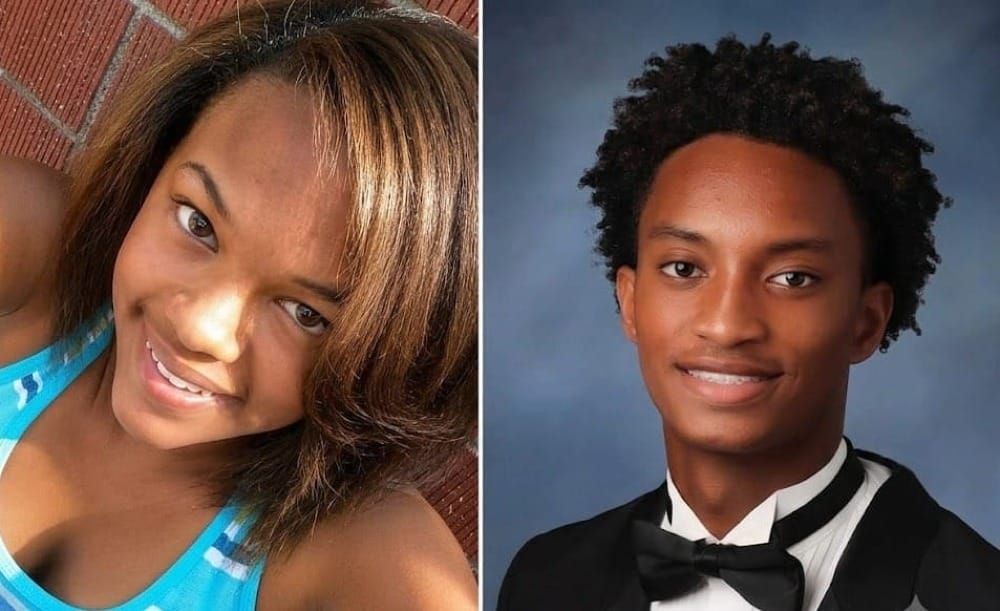
We saw it again with Tasia Fortune, a 29-year-old Black woman found hanging from a tree behind a vacant house in Mississippi. And if your stomach churned when you read her name, it’s because you’ve lived through this exact script before. You heard it with Willie Andrew Jones Jr. in 2018. You heard it with Otis Byrd in 2015. You heard it with Frederick Jermaine Carter in 2010. A state where over 600 documented lynchings stained the soil during Jim Crow wants us to believe that Black folks in the 21st century have suddenly developed an inexplicable, recurring urge to end their own lives in the woods.
They want us to treat these deaths as isolated tragedies, as personal mental health crises detached from geography, history, or race. But Mississippi’s soil has a memory, and so do we.
Look at what is unfolding down on the Gulf Coast with Nolan Wells, the 18-year-old college freshman whose body was recovered after spending the Fourth of July on Horn Island with a group of white acquaintances. His friends came back to the mainland with his phone, leaving him behind. An independent examination funded by Colin Kaepernick and led by Ben Crump revealed missing neck tissue and unexplained trauma to the back of Nolan’s head—trauma the initial state narrative conveniently glossed over.
Now, federal agents are making arrests left and right—not yet for Nolan’s death itself, but for the web of witness threats, federal intimidation, and silence surrounding the case. The official story is fraying at the edges because a family refused to accept the standard Southern brush-off.
When you place the hanging of Tasia Fortune alongside the suspicious, contested death of Nolan Wells, the common denominator isn't online speculation or "clout chasing." The common denominator is the structural refusal of law enforcement in Mississippi to treat Black life as inherently worthy of a rigorous, uncompromising homicide investigation from minute one.
In Mississippi, when a young Black man vanishes on an island with white peers or a young Black woman is found suspended from an oak tree behind an abandoned house, the burden of proof is immediately inverted. The victim’s family is forced to raise tens of thousands of dollars, hire outside pathologists, and scream into the digital void just to force the state to do basic police work. Meanwhile, local officials treat public suspicion not as a reasonable reaction to a hundred-year history of racial terror, but as an inconvenience to be managed.
We are told not to jump to conclusions. We are told to wait for the grand juries and the official autopsy reports. But history has taught Black America that "waiting for the official report" in Mississippi often means waiting for the concrete to dry over the truth.
Whether it is a rope in a backyard tree or unexplained blunt force trauma on a sun-bleached island, these aren't just isolated police dockets. They are chapters in an unfinished book. Until law enforcement in Mississippi operates with absolute transparency—until independent oversight is the default rather than a luxury funded by celebrities and civil rights lawyers—every mysterious death of a Black person in that state will carry the heavy, inescapable shadow of the gallows tree. And no press release from a local sheriff is ever going to wash that history clean.
---------------------------
Madison Gray is a New York City-based writer and editor whose work has appeared in multiple publications globally. Reach out to him at madison@starkravingmadison.com.